News media coverage relating to the Third World and beyond is selective depending on the ideals of the Western nation. Ethnocentrism in the media leads journalists to only report on what is deemed newsworthy. Do we report on these stories because people are suffering or because our own interests are at stake? The Ebola crisis in Sub-Saharan Africa in 2014 became a global news storm perpetuating all TV screens, radios and the minds of people around the world. Soon, campaigns from NGOs and other charitable organisations hogged TV air, urging us to donate to this ever-looming humanitarian crisis. But what made this epidemic different from others and made it newsworthy? With many nations around the world suffering from diseases, famine and war, what separated the Ebola Virus from the others? It had the chance to affect us in the global North. However, how NGOs campaign and the media cover stories has an unprecedented ethical impact on the people affected. In the case of Ebola, the usage of both shock appeals and celebrity involvement enhanced the dehumanisation of the victims of this deadly disease, inciting fear in those in the west and intensifying the ‘Otherness’ and institutional hierarchy between us and them.
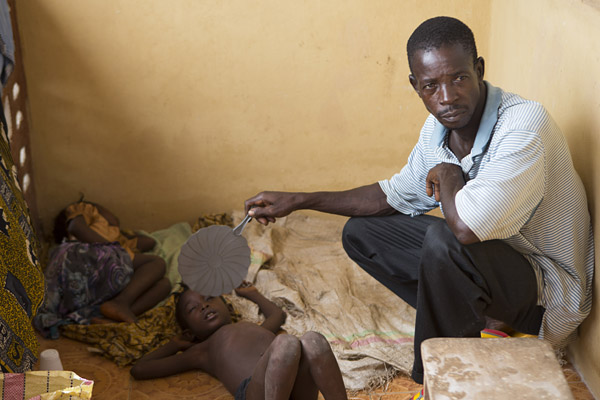
Shock appeals use imagery to inspire pity and guilt in the audience, encouraging them to donate. They tend to use raw realism, which is graphic evidence of malnourishment and death. Showing people in this light only creates perceptions of helpless people and strips them of their dignity. The other option is deliberate positivism which documents success stories, allowing agency and empowerment. However, it is not effective in short term fundraising, whereas shock appeals are very effective in urgent cases, although this means usage of poverty porn. Where people are viewed as passive and helpless and objects of voyeuristic pleasure (Bell and Coicaud, 2007). It reinforces the hierarchy between us and them by showing stark differences and people in true vulnerability, with the suggestion that only you, as the ‘White Saviour’ can help this person, therefore enhancing the Western perceptions of superiority. In a Belgian study, more than 50% of NGO posters were of innocent women and children.

Almost all NGOs and UN agencies have partnerships with celebrities. They help the audience be more interested in an appeal. However, there can be issues with commodification. The celebrity campaigns ignore structural causes of poverty and make it more about the celebrity instead, leaving them unable to represent themselves. Scott (2015) found that people doubt the authenticity of campaigns involving celebrities and they can trivialise complex situations. Idris Elba got involved in the Ebola crisis with the Africa United football team, taking famous footballers and using them to raise money. It received critiques about how it took away the focus from the people suffering with use of the group of famous people.
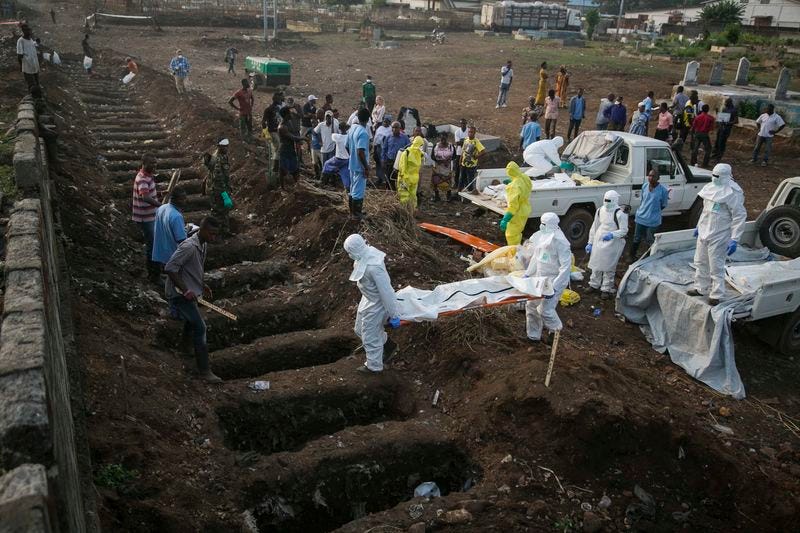
NGOs are the public faces of development and mediate the connection between the global north and the global south. The images they use can legitimise the inequalities and perpetuate subconscious hierarchies between us and them. Schroeder and Endless (1988) study on the New York Times’ stories on Africa showed that in 1955-95, 73% of the stories were negative. There is a serious underreporting of positive stories in Africa and it is contributing to the African discourse, with Africa now becoming more synonymous with poverty (Madahao and McKinney, 2007). The Observer published an article written by a girl in perspective of the Ebola crises, it is giving a vulnerable person a voice, but the picture she paints is almost apocalyptic and this is potentially why this rare first-hand account was published as it is a shocking piece. During times of crises, like the Ebola crisis, the media’s usage of shock appeals and by contrast celebrity interventionism blows up the ‘White Saviour complex’ and ‘Otherness’. It brings to modern times the European colonial imagination of the dark continent, filled with disease, wars and poverty. Using both exploitive and vulnerable pictures of victims alongside celebrities strips them of any opportunity to have their say and use their voice, establishing their lack of dignity and giving them no respect. It is putting a comparison together of the respected celebrity among the poor vulnerable people. Therefore, the combined use of celebrities and shock appeals in the media on humanitarian crises contributes to modern Africanism and enhances the dehumanisation of the people.
Bell, D. and Coicaud, J. (2007). Ethics in action. Cambridge: Cambridge University Press, pp.23,24.
Madahao, M. and McKinney, J. (2007). Media representations of Africa: Still the same old story?.
World Health Organization. (2014). Ebola in Sierra Leone: A slow start to an outbreak that eventually outpaced all others. [online] Available at: https://www.who.int/csr/disease/ebola/one-year-report/sierra-leone/en/ [Accessed 24 Feb. 2020].
Boseley, S. (2014). Sierra Leone to use scare-tactics campaign in Freetown to curb Ebola. [online] the Guardian. Available at: https://www.theguardian.com/world/2014/dec/16/sierra-leone-scare-tactics-freetown-curb-ebola [Accessed 24 Feb. 2020].
 Development Discussions